


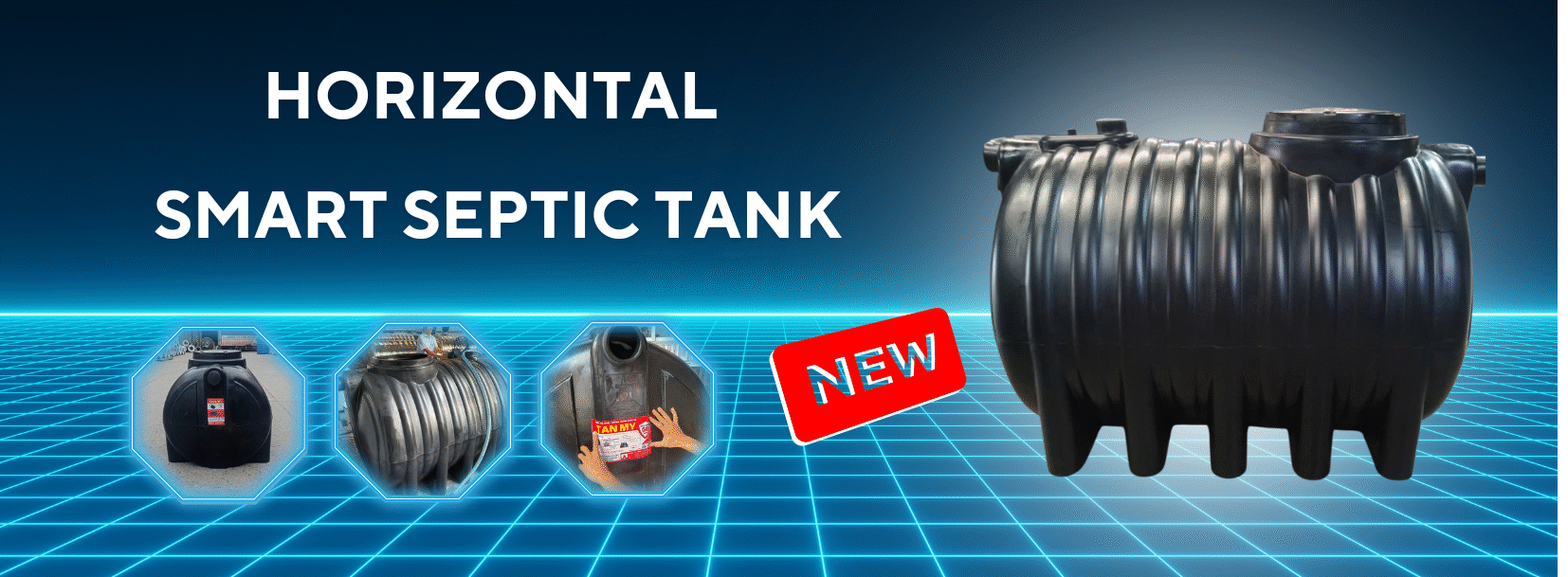




Installing the SEPTIC TÂN MỸ smart septic tank is simple and time-efficient. To ensure safe operation and optimal performance, please follow the steps below for proper installation.
Step 1: Site inspection
Before installing the TÂN MỸ smart septic tank, it is necessary to carefully inspect the installation site. To ensure smooth wastewater flow and prevent blockages, the outlet pipe of the tank must be positioned approximately 15 cm higher than the wastewater drainage system.
Note: For optimal performance, the septic tank should be installed outdoors and close to the waste source.
Step 2: Excavating the septic tank pit
After selecting a suitable location, excavate a pit that is approximately 30 cm wider than the septic tank body on each side. This allows sufficient space for backfilling with sand or other materials around the tank after installation.
Once excavation is complete, remove any obstructions such as rocks, debris, or materials that may interfere with the installation process. Clean the pit thoroughly and compact the base to create a firm, level foundation.
Step 3: Pouring the concrete base
Before placing the tank, a solid concrete base must be constructed.
The pit depth should be calculated as follows:
Pit depth = septic tank height + thickness of the concrete base + thickness of the concrete cover slab.
The concrete base consists of two layers:
– Layer 1: M150 concrete (1×2 aggregate), 50 mm thick.
– Layer 2: M250 concrete (1×2 aggregate), 80 mm thick, reinforced with D10 steel bars at 200 mm spacing, single layer.
Note: For septic tanks with a capacity greater than 2,000 liters, or in areas with weak soil conditions, the base should be reinforced by driving piles to prevent settlement and ensure long-term stability of the septic tank.
Step 4: Constructing the tank enclosure pit
Build a surrounding wall for the installation pit of the SEPTIC TÂN MỸ smart septic tank using 110 mm brick walls. Plastering or waterproofing is not required. Ensure that the distance between the pit walls and the septic tank body is no less than 10 cm on each side.
Recommendation: In cases where the septic tank is buried deeper below ground level, the burial depth should not exceed 25 cm.
Step 5: Positioning the tank and installing inlet/outlet pipelines
Place the septic tank into the prepared pit and carefully align it to the correct installation position. Install Ø110 flexible connectors (flex pipes) for both the inlet and outlet connections, linking the tank to the wastewater piping system. Secure the connections firmly using stainless steel clamps.
Ensure that the outlet pipe of the septic tank is positioned higher than the wastewater drainage system to prevent backflow of wastewater into the tank.
Note: After positioning the tank, check whether it is vertically level. If the tank is tilted, recheck and adjust the flatness of the pit base before proceeding.
Step 6: Checking for leakage in the pipeline connections
To thoroughly inspect the pipeline connections for any leakage, fill the septic tank with water and leave it for approximately 24 hours for monitoring. Only after confirming that there are no leaks in the connected piping system should the subsequent installation steps be carried out.